

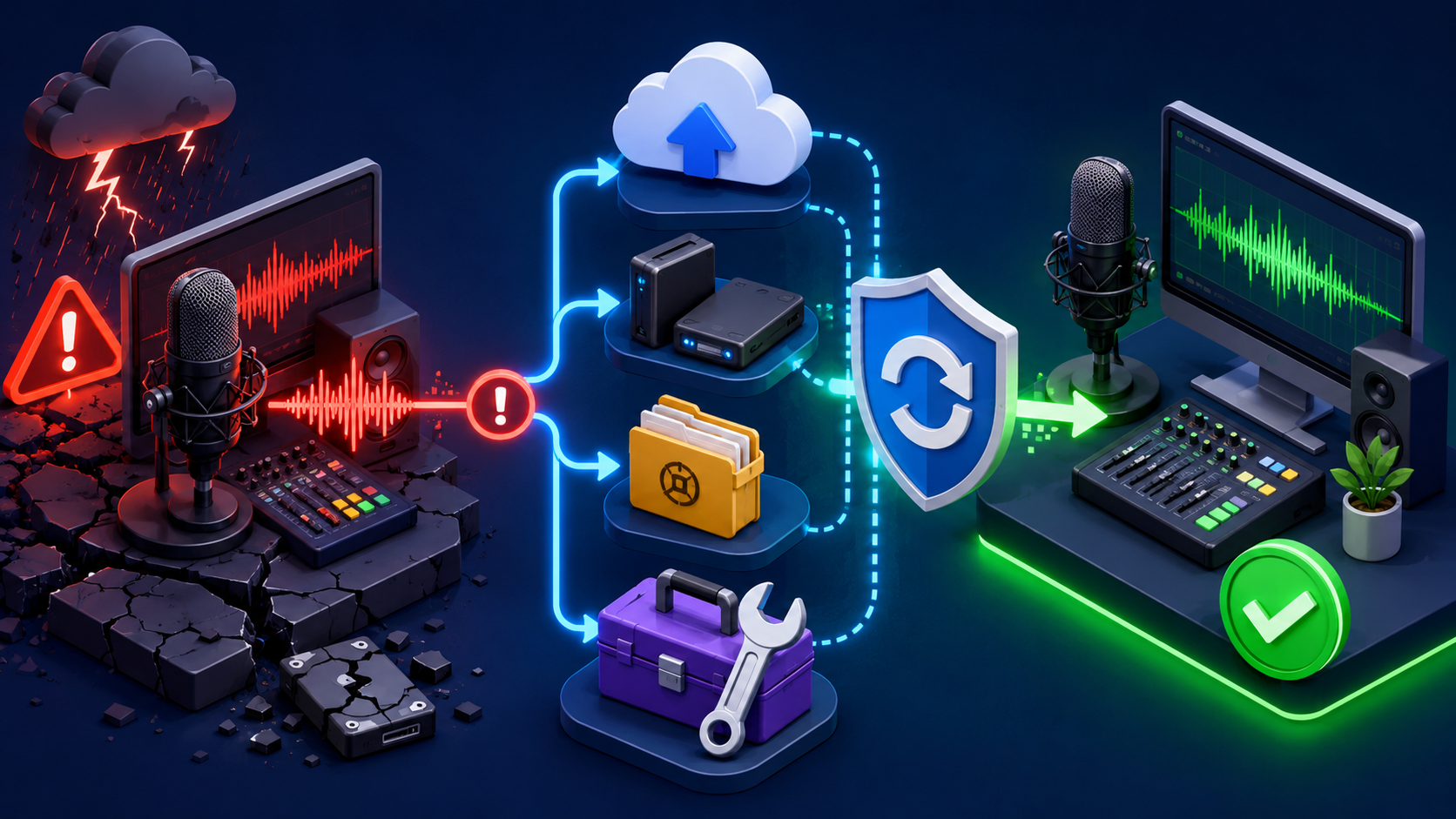
Production teams across the podcast industry face mounting pressure to maintain consistent publishing schedules while managing increasingly complex technical infrastructure. Equipment failures, hosting platform outages, team member availability issues, and data loss scenarios can derail even the most established shows. The financial impact extends beyond immediate production costs to include advertiser relationships, audience retention, and long-term brand credibility.
A disaster recovery plan for podcast production represents a comprehensive strategy that protects your content creation process, preserves critical data, and maintains audience engagement when unexpected disruptions occur. Unlike traditional IT disaster recovery focused solely on server backups and network restoration, podcast-specific plans must account for creative workflows, talent coordination, content distribution channels, and audience analytics continuity. Listener's approach to unified data management provides production teams with centralized visibility that becomes crucial during crisis situations.
The complexity of modern podcast operations requires recovery planning that addresses both technical and operational dimensions. Your Unified Network Dashboard consolidates production metrics, audience data, and distribution analytics into a single source of truth that remains accessible even when individual platforms experience disruptions. This unified perspective enables teams to make informed decisions about content priorities, audience communication, and resource allocation during recovery periods while maintaining the data-driven approach that drives successful podcast growth.
Core Components of Podcast Production Disaster Recovery
Technical infrastructure forms the foundation of any robust disaster recovery strategy, but podcast production requires specialized considerations beyond standard business continuity plans. Audio equipment represents significant capital investment, but more importantly, equipment-specific settings and configurations directly impact content quality and brand consistency. Recording environments, microphone positioning, acoustic treatments, and processing chains create unique sonic signatures that audiences recognize and expect from established shows.
Content backup strategies must extend far beyond simple file storage to encompass version control, edit decision lists, project files, and raw footage or audio stems. Professional productions often generate multiple iterations of episodes, alternative cuts for different platforms, and archival content that supports future compilation episodes or anniversary specials. Listener's development team has observed that successful recovery operations depend on maintaining access to these production assets alongside the audience data that informs content decisions.
Distribution channel relationships require careful documentation and backup authentication procedures that many producers overlook until platforms become inaccessible. RSS feeds, platform-specific metadata, advertising insertion points, and audience verification processes can take weeks to restore without proper documentation. The team at Listener emphasizes that recovery planning must account for the interconnected nature of modern podcast ecosystems where audience data flows between multiple platforms and analytics providers.
Recovery time objectives for podcast production typically range from same-day restoration for daily news shows to week-long windows for weekly entertainment content, but these timelines must account for quality standards and audience expectations:
- Equipment redundancy systems: Backup recording setups with documented configurations, spare microphones with matching frequency responses, and alternative recording locations with acoustic profiles suitable for brand consistency
- Content version control: Cloud-based project file storage, automated backup systems for raw recordings, and documented workflows for accessing archived materials across multiple team members and production phases
- Platform authentication backup: Documented access credentials for all distribution channels, backup contact information for platform representatives, and alternative hosting providers with pre-configured settings ready for emergency deployment
- Team communication protocols: Clear escalation procedures for different disaster scenarios, backup contact methods when primary communication tools fail, and decision-making authority documentation for time-sensitive recovery operations
Data protection strategies must balance accessibility with security, particularly for shows that handle sensitive interview subjects or proprietary sponsor information. Cloud storage provides geographic redundancy, but podcast productions often involve large file sizes that can strain bandwidth during restoration periods. Local backup systems offer faster recovery times but require physical security measures and regular testing protocols to ensure reliability when needed.
Audience communication becomes critical during extended outages, as podcast listeners expect consistent publishing schedules and may migrate to alternative content when shows disappear without explanation. Listener AI can help identify the most engaged audience segments who warrant direct communication during disruptions, enabling producers to prioritize relationship management efforts where they will have the greatest retention impact.
Operational Continuity During Crisis Situations
Workflow documentation often receives less attention than technical backups, but operational knowledge represents the institutional memory that enables teams to maintain production quality under stress. Interview preparation processes, editing standards, content approval workflows, and publishing checklists contain subtle details that significantly impact output quality when regular team members become unavailable. Successful recovery operations depend on documented procedures that enable substitute team members to maintain brand standards and audience expectations.
Remote production capabilities have evolved significantly since 2020, but many teams still lack robust procedures for distributed recording, editing, and approval processes. Interview shows face particular challenges when regular recording locations become unavailable, as acoustic environments directly impact conversation quality and listener engagement. The experts at Listener emphasize that operational planning must account for the relationship dynamics and technical comfort levels of regular guests and interview subjects who may struggle with alternative recording setups.
Content calendar flexibility requires advance planning that balances evergreen material with timely content, enabling teams to shift publishing schedules without losing audience engagement or advertiser value. Seasonal content, anniversary episodes, and compilation shows provide valuable alternatives when regular production becomes impossible, but these alternatives require preparation and organization during normal operations. Episode Clusters can help identify thematic content groupings that support alternative programming during recovery periods.
Budget allocation for disaster scenarios must account for emergency equipment rental, temporary hosting upgrades, expedited technical support, and potential talent schedule changes that increase production costs. Insurance coverage for podcast productions varies significantly between providers and often excludes specific scenarios that commonly impact content creators. Recovery budgets should include provisions for legal consultation, public relations support, and audience retention campaigns that may become necessary during extended disruptions:
- Alternative content strategies: Pre-recorded evergreen episodes, interview compilation shows, behind-the-scenes content, and audience Q&A episodes that require minimal production infrastructure while maintaining publishing consistency
- Remote production workflows: Distributed recording procedures, file sharing protocols, remote editing capabilities, and quality control processes that maintain brand standards when team members cannot access primary production facilities
- Vendor relationship management: Backup equipment rental agreements, alternative hosting provider relationships, emergency technical support contracts, and expedited delivery arrangements for critical replacement equipment
- Financial impact mitigation: Emergency budget allocations, insurance claim procedures, advertiser communication protocols, and revenue protection strategies that minimize long-term financial damage from production disruptions
Talent management during crisis situations requires sensitivity to individual circumstances while maintaining professional obligations and audience expectations. Regular hosts may face personal emergencies that prevent participation, while guest interviews may require rescheduling or alternative formats that accommodate changing availability. Backup hosting arrangements, co-host development, and interview format flexibility provide operational alternatives that maintain content quality during personnel disruptions.
Quality control standards must balance perfectionism with practical limitations during recovery scenarios, as audiences generally prefer consistent content delivery over perfect production values during acknowledged crisis periods. Total Listener Value metrics can help production teams understand which quality elements most significantly impact audience engagement, enabling informed decisions about production shortcuts that minimize listener impact during resource-constrained recovery operations.
Analytics and Performance Monitoring During Recovery
Data continuity becomes paramount when production disruptions threaten to break the analytical insights that drive content decisions and advertiser relationships. Listener's platform maintains unified tracking across distribution channels, enabling teams to monitor audience response patterns even when individual platforms experience technical difficulties. Understanding how audiences respond to alternative content formats, adjusted publishing schedules, or temporary quality changes provides crucial feedback for optimizing recovery strategies and maintaining listener engagement throughout crisis periods.
Performance benchmarking during disaster recovery requires realistic expectations that account for disrupted workflows, alternative content formats, and audience communication about temporary changes. Established shows typically experience 15-30% audience fluctuation during recovery periods, but this impact varies significantly based on communication transparency, alternative content quality, and recovery timeline length. Back-End Analytics & Reports provide granular visibility into audience behavior changes that help teams distinguish between temporary disruption effects and longer-term trends requiring strategic adjustment.
Cross-platform monitoring becomes essential when primary distribution channels experience outages or technical difficulties that force audiences toward alternative platforms. Listener Heat Map functionality reveals geographic and demographic patterns in audience migration that help teams understand which recovery strategies resonate with different listener segments. This intelligence enables targeted communication efforts and platform prioritization decisions that maximize audience retention during resource-constrained recovery operations.
Revenue impact tracking requires integration between audience analytics, advertiser reporting, and operational cost accounting to understand the full financial implications of production disruptions. Sponsor relationships depend on consistent audience delivery and performance reporting, making data continuity crucial for maintaining advertiser confidence during crisis periods. Sales Enablement Pages can provide sponsors with real-time access to performance data that demonstrates ongoing audience engagement despite temporary production challenges:
- Audience retention monitoring: Real-time tracking of listener engagement patterns, download volume changes, platform migration behaviors, and audience feedback sentiment that guides recovery strategy adjustments and communication priorities
- Revenue impact assessment: Integration between audience metrics and advertiser reporting systems, sponsor communication protocols, and alternative monetization strategies that protect revenue during extended production disruptions
- Content performance evaluation: Comparison analytics between regular programming and emergency content alternatives, audience preference data for different format options, and engagement metrics that optimize recovery content strategies
- Recovery effectiveness measurement: Before-and-after analysis of audience growth patterns, engagement quality metrics, and long-term retention rates that evaluate the success of different disaster recovery approaches and inform future planning efforts
Automated alerting systems should trigger when key performance indicators fall below predefined thresholds, enabling rapid response to developing situations before they escalate into full crisis scenarios. Early warning systems can detect equipment degradation, platform performance issues, team availability problems, or audience engagement declines that warrant proactive intervention. Listener's AI capabilities can identify subtle pattern changes that human analysis might miss during high-stress periods.
Recovery success metrics extend beyond simple audience number restoration to encompass engagement quality, advertiser satisfaction, team morale, and operational efficiency improvements that demonstrate organizational resilience. Long-term recovery evaluation should examine whether disaster preparedness efforts strengthen overall production capabilities, improve team coordination, or reveal optimization opportunities that benefit normal operations. Customizable Profiles & Analytics enable detailed tracking of recovery-specific metrics alongside regular performance indicators, providing comprehensive insights into both immediate and long-term recovery outcomes that inform future disaster preparedness investments.