

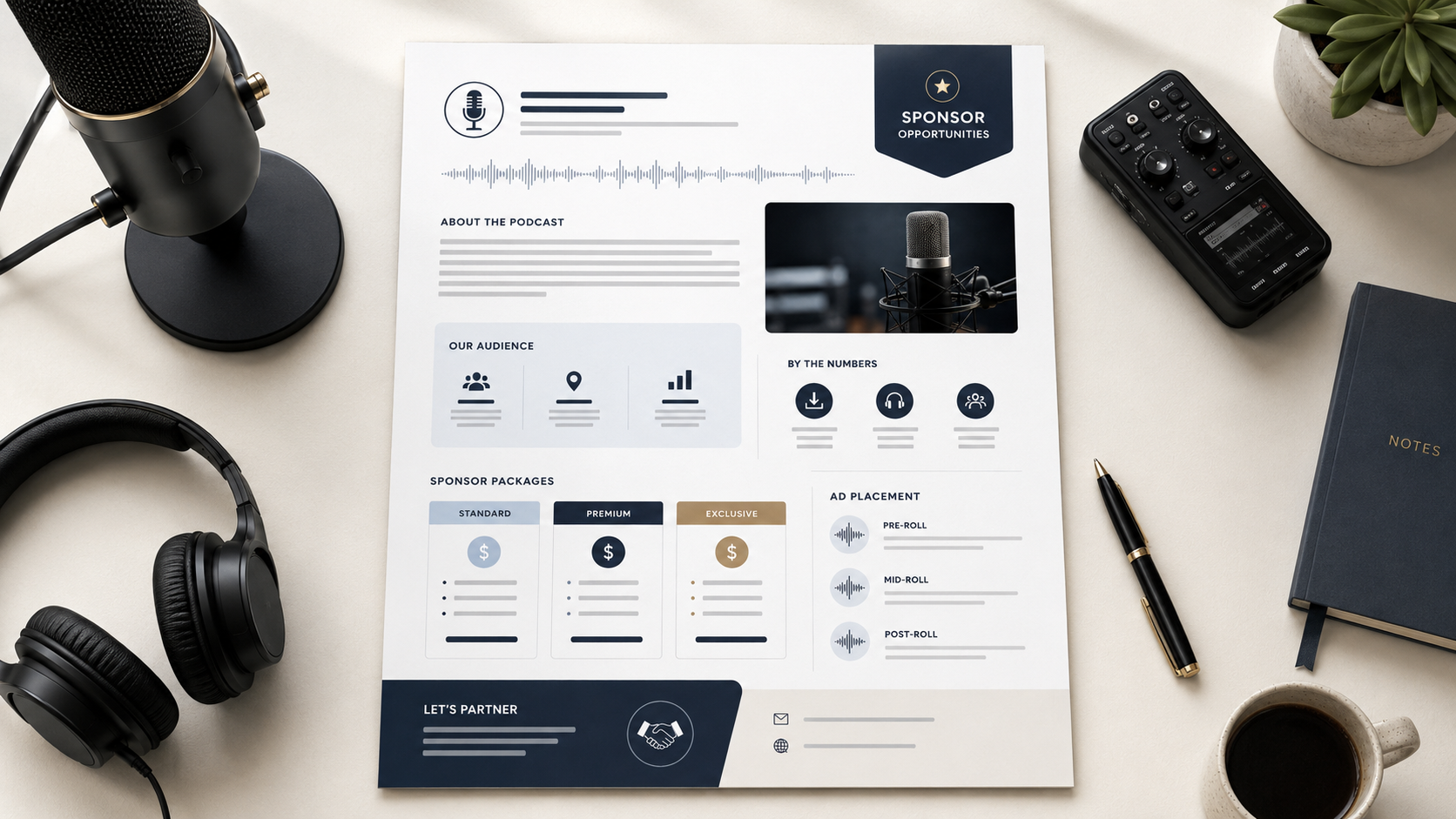
Creating an effective podcast sponsorship one-sheet requires more than listing download numbers and basic demographics. Sponsors want to understand your audience's behavior patterns, engagement depth, and purchasing intent before committing their advertising budgets. The most successful one-sheets transform complex analytics into clear, actionable insights that demonstrate genuine audience value.
The challenge lies in unifying data from multiple sources into a cohesive narrative. Traditional podcast analytics tools often fragment information across different platforms, making it difficult to present a complete picture of listener behavior. When sponsors see inconsistent metrics or gaps in audience understanding, they question the reliability of your entire proposal.
Listener's platform addresses this fragmentation by consolidating cross-platform data into unified reports that tell the complete audience story. This comprehensive approach enables podcasters to present sponsors with the deep audience intelligence they need to make confident investment decisions. The result is one-sheets that move beyond surface-level metrics to demonstrate measurable business value.
Essential Data Points That Drive Sponsorship Decisions
The foundation of any compelling one-sheet starts with audience metrics that matter to advertisers. Demographics remain important, but sponsors increasingly focus on behavioral data that indicates purchasing intent and brand affinity. Age and location provide context, but engagement patterns reveal whether your audience actually responds to sponsored content.
Download numbers alone don't tell the complete story sponsors need to hear. Completion rates, episode-to-episode retention, and listener journey analytics provide deeper insights into audience engagement quality. When sponsors understand how deeply listeners engage with your content, they can better predict their own campaign performance.
The experts at Listener have identified four critical data categories that consistently influence sponsorship decisions:
- Audience Demographics and Psychographics: Age, location, income levels, interests, and lifestyle indicators that align with sponsor target markets
- Engagement Quality Metrics: Episode completion rates, subscriber retention, cross-episode listening patterns, and content interaction behaviors
- Platform Distribution Analysis: Listening platform preferences, device usage patterns, and cross-platform audience overlap that affects campaign reach
- Conversion Indicators: Survey responses, social media engagement, website traffic patterns, and other signals that predict sponsor campaign effectiveness
These metrics become powerful when presented in context rather than isolation. Sponsors want to understand relationships between different data points and how these connections translate into campaign success. For example, high completion rates combined with strong cross-episode retention suggest an engaged audience likely to pay attention to sponsor messages.
Listener's Unified Network Dashboard automatically correlates these metrics to reveal audience behavior patterns that individual analytics tools might miss. This integrated approach helps podcasters identify their strongest selling points and present them with supporting data that builds sponsor confidence.
Designing Visual Elements That Convert Prospects
Visual presentation transforms raw data into compelling narratives that sponsors can quickly understand and act upon. The most effective one-sheets balance comprehensive information with clean, scannable design that highlights key value propositions. Sponsors typically spend less than two minutes reviewing initial proposals, so visual hierarchy determines which information drives their decision-making process.
Color schemes and layout choices communicate professionalism and attention to detail that sponsors associate with successful partnership potential. Consistent branding throughout the one-sheet reinforces your podcast's market position and helps sponsors visualize how their brand might integrate with your content. Charts and graphs should simplify complex data rather than overwhelm viewers with unnecessary detail.
The team at Listener has observed that successful one-sheets follow predictable visual patterns that guide sponsor attention toward the most compelling data points. Header sections establish credibility and context, while body content focuses on specific audience value propositions. Footer information provides next steps and contact details that facilitate follow-up conversations.
Listener's Custom Forms & Inbox feature streamlines the process of gathering additional sponsor requirements and maintaining organized communication throughout the proposal process. This systematic approach ensures that visual presentation aligns with operational efficiency in managing sponsor relationships.
Key visual elements that enhance one-sheet effectiveness include:
- Header Branding and Contact Information: Professional logo placement, clear podcast identification, and easily accessible contact details for immediate follow-up
- Executive Summary Section: Concise value proposition statement with key audience metrics and unique selling points prominently displayed
- Data Visualization Components: Charts, graphs, and infographics that make complex analytics immediately understandable and actionable
- Testimonial and Social Proof Elements: Sponsor quotes, case study highlights, and success metrics from previous partnerships that build credibility
The most successful visual approaches avoid cluttered layouts that dilute key messages. White space creates focus, while strategic use of bold text and color highlights draws attention to crucial information. Sponsors should be able to identify your core value proposition within seconds of opening your one-sheet.
Professional design doesn't require expensive software or design expertise when you follow proven layout principles. Consistency in fonts, colors, and spacing creates visual cohesion, while logical information flow guides readers through your proposal in a natural progression from general appeal to specific partnership benefits.
Measuring and Optimizing One-Sheet Performance
Tracking one-sheet effectiveness requires systematic measurement of proposal outcomes and sponsor feedback patterns. The most successful podcasters treat their one-sheets as living documents that evolve based on real-world performance data. Response rates, follow-up meeting requests, and conversion timelines provide insights into which elements drive sponsor interest and which create barriers to partnership.
A/B testing different versions with similar sponsor prospects reveals which data presentations resonate most strongly with your target advertiser demographic. Some sponsors prioritize audience size metrics, while others focus more heavily on engagement quality or demographic alignment. Understanding these preferences allows you to customize presentations for maximum impact.
Listener's development team has built analytics tracking capabilities that help podcasters understand which sponsor outreach efforts generate the strongest responses. By correlating one-sheet versions with proposal outcomes, you can identify the specific combinations of data presentation and visual design that convert prospects into partners most effectively.
The feedback loop between proposal performance and one-sheet optimization becomes particularly valuable when managing multiple sponsor relationships simultaneously. Patterns emerge that reveal common sponsor concerns, preferred data formats, and decision-making timelines that inform future proposal strategies.
Essential performance tracking approaches include:
- Response Rate Analysis: Monitoring initial sponsor responses, follow-up meeting requests, and progression through the partnership funnel
- Feedback Documentation: Recording sponsor questions, concerns, and requests for additional information that indicate one-sheet gaps
- Conversion Timeline Tracking: Measuring time from initial proposal to partnership agreement and identifying bottlenecks in the decision process
- Version Performance Comparison: Testing different data presentations, visual layouts, and value proposition framings to optimize conversion rates
Successful optimization requires patience and consistent tracking over multiple sponsor outreach cycles. Individual sponsor responses might reflect specific campaign needs rather than one-sheet effectiveness, but patterns across multiple prospects reveal genuine improvement opportunities. The goal is creating a one-sheet template that consistently generates positive sponsor responses across different advertiser categories.
Listener's approach to data unification makes performance tracking more reliable by ensuring that the metrics you present in one-sheets accurately reflect actual audience behavior. When sponsors see consistent results that match your proposals, they develop confidence in your partnership potential and are more likely to commit to longer-term advertising relationships.